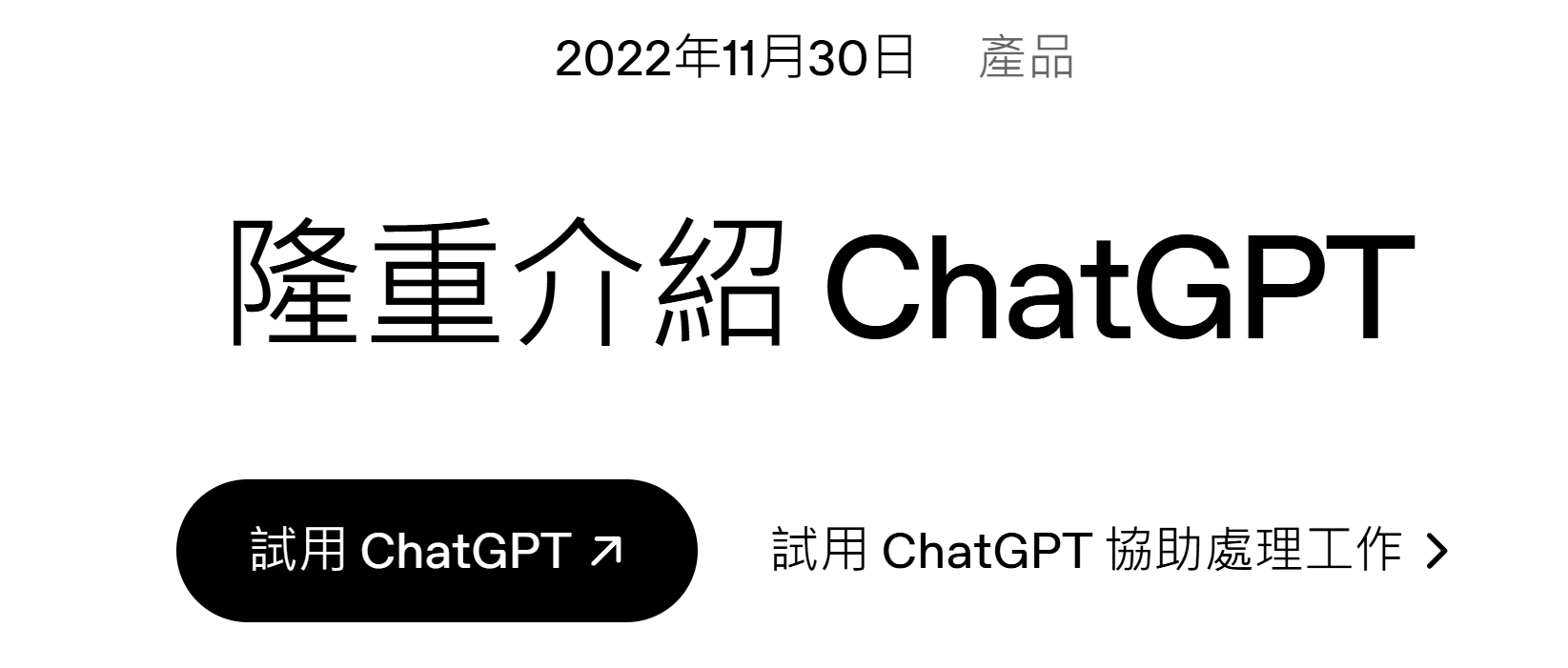
On the last day of November 2022, OpenAI released a product that would change history: GPT-3.5.
Frenzy. Absolute frenzy.
It is hard to describe how much of an impact GPT-3.5 had on me at the time — something that no subsequent AI or Agent framework could ever replicate.
People always say the white moonlight is the most beautiful; not even the real person can match the version in your memory.
GPT-3.5 was like that. In today's fiercely competitive LLM landscape, a model at GPT-3.5's level wouldn't attract users even if it were free. Too slow, too dumb.
But back in 2022, still a student, hearing about this thing on the internet for the first time, I was consumed with enthusiasm.
OpenAI was never available in mainland China from the start — it required phone verification. To get access, people truly tried every method imaginable.
I was among the early adopters. I remember the hottest platform at the time was a Russian SMS verification site: SMS-Activate.
That site was slow, clunky, and had a minimum top-up amount. Even after paying, there was no guarantee you would receive a verification code.
With so many people flooding in, the site was frequently inaccessible, and prices kept climbing.
At that point, OpenAI didn't even have a subscription — the research preview was free. The AI product itself wasn't profitable yet, but the SMS platforms were making a killing.
GPT-3.5 wasn't actually that good, but for someone seeing this kind of product for the first time, it was mind-blowing.
To get it to generate a barely usable article, you had to iteratively refine prompts, regenerate over and over, and watch the text slowly crawl across the screen during agonizing waits.
I had near-infinite patience for this nascent future.
After all, while online discussions were everywhere, few people in real life mentioned it. The concept of AI was nowhere near as mainstream as it is now.
But soon enough, everyone knew about GPT.
ChatGPT reached 1 million users within 5 days of launch; within about two months, monthly active users hit an estimated 100 million, making it one of the fastest-growing consumer apps in history.
December 5, 2022: Sam Altman tweeted that ChatGPT had surpassed 1 million users, just 5 days after launch.
January 2023: UBS, citing Similarweb data, estimated ChatGPT's monthly active users at 100 million, averaging about 13 million daily unique visitors. Reuters reported this made ChatGPT one of the fastest-growing consumer apps in history.
The paper Attention Is All You Need became widely known because of GPT.
GPT was so hot that other companies quickly followed suit.
2023-02: Meta released LLaMA, and with the leaked weights, the open-source community erupted again.
2023-03: OpenAI released GPT-4, the world's first multimodal flagship model.
That same month, Anthropic released Claude 1, but it was invite-only, so it didn't make much of a splash.
2023-07: Llama 2 was released as the first free commercial open-source model, reshaping the industry landscape.
2023-11: Grok-1 was released. Elon Musk had entered the battle.
2023-12: Gemini 1.0 was released. Internet giants were all jumping in.
...
So much has happened.
And now, whether it is OpenAI's latest GPT-5.5 or Anthropic's freshly released Claude Opus 4.8, nothing can recreate the awe I felt when GPT-3.5 launched.
Oh, another new flagship model.
That's all.
With this relatively calm attitude, AI has truly entered everyday life.
Code is written by AI, videos are made by AI, answers come from AI.
I believe many people now set aside a portion of their monthly salary as an AI fee — just like phone bills, internet, utilities — an indispensable part of life.
Every time DeepSeek goes down, or Claude and GPT enact mass bans, countless people are unable to continue their work.
It's actually a lot like Cyberpunk 2077:
AI is cyberware. Those with money get military-grade implants like Claude; those without resources or skills use domestic models. And then there are the alternative routes — using proxy relay stations, which you could call underground military cyberware.
Nowadays, new models are released almost every month, and the competition is fierce.
Models are getting stronger, context windows are getting longer, multimodal capabilities are all advancing...
All of this, in just 30 short months.
The first Industrial Revolution is generally considered to have spanned roughly the 1760s-1830s/1840s, taking 70-80 years. The second and third Industrial Revolutions each took 30-40 years.
AI development has taken only 30 months. Altman hasn't even retired, and we've already experienced at least ten paradigm shifts.
Times march on. We can only let the surging crowd push us forward.
Login to Comment
You need to log in to leave a comment.
Login